Informed consent form template for Word

Informed consent form template for Word
Whenever a person is about to undergo a procedure, an examination, a treatment or an activity that carries some risk, that person needs to understand first what it is about. The informed consent form is the document that records that the person received the explanation, understood it and decided to authorise it of their own free will. It is not a formality to protect the professional: it is the written proof of an honest conversation.
This informed consent form template for Word gathers in a single file the fourteen points usually required in a document of this kind. It is designed for professionals, consulting rooms, beauty and wellness studios, laboratories, workplace health programmes and also for small and medium businesses that organise days, campaigns or activities with participants. If your business serves the public and needs a signed authorisation, here you have a base ready to adapt.
The file is editable and free to use inside your business. You can change the headings, add your logo, adjust the language to your trade and use it as many times as you need. What matters is that the person signing understands what they are signing and that the document is properly filled in, because a signature on a text nobody explained is worth very little.
Before you start, it helps to keep one simple idea in mind: the value of this document is not in the paper, but in the conversation that happens before it. If the explanation was clear, the signature only confirms something already discussed. If there was no explanation at all, no template can fix that.
⬇ Download informed consent form (.docx)What it is and what it is for
An informed consent form does two things at the same time: it informs and it records. It informs because it forces you to explain, in plain words, what will be done, what it is for and what could go wrong. It records because the person's signature and the date remain on file, so the professional or the business can show that there was a prior explanation and that the decision was free.
In practice, it serves very specific situations:
- Authorising a procedure, an examination, a treatment or an activity after receiving the corresponding explanation.
- Recording the authorisation of a representative when the person is a minor or cannot sign on their own behalf.
- Setting down in writing that the person knows the expected benefits and also the possible risks or discomforts.
- Documenting that alternatives were offered and that the person was able to choose among them with enough information.
- Confirming that personal information will be handled confidentially and for a defined purpose.
- Keeping a record that the person was able to ask anything and to withdraw at any time without consequences.
It is also useful for businesses outside the health sector. A shop that runs a wellness day for its customers, a company that takes its team to an outside activity or a centre that provides a service where sensitive data is collected all need the same clarity: explain well and record the authorisation.
What the template includes
The file comes with the fourteen points already in order, with space to write in each one. This is the full list and what belongs in every section:
| Section | What goes there |
|---|---|
| 1. Details of the person giving consent | Full name, identity document and contact details of the person, plus the representative's details when the person is a minor or cannot sign on their own behalf. |
| 2. Details of the person providing the information | Name, profession or role and contact details of the professional or the establishment responsible for giving the explanation. |
| 3. What will be done | A plain description of the procedure, examination, treatment or activity, with the place, the planned date and the approximate duration. |
| 4. What it is for | The specific purpose: what is being sought, why it is proposed and what is expected to be achieved. |
| 5. Expected benefits | What the person may obtain, explained without exaggerated promises and without guaranteeing results. |
| 6. Possible risks and discomforts | A three-column table: risk, likelihood (high, medium or low) and what is done if it appears. |
| 7. Alternatives | Other available options, including the possibility of doing nothing, with their advantages and disadvantages. |
| 8. Voluntary nature | A sentence making clear that the person decides freely, that they may refuse and that they may withdraw without suffering consequences. |
| 9. Confidentiality and personal data | How the information is stored, who may see it and what it will be used for, together with the authorisation for its handling. |
| 10. Responsibilities of the person | What is expected from the person authorising: following the instructions received, reporting any change and attending the planned follow-ups. |
| 11. Statement of understanding | The space where the person confirms that they received the explanation, understood it and had the chance to ask questions. |
| 12. Questions before signing | The place to write down the doubts that came up and the answers given, so that everything is on record. |
| 13. Authorisation and signatures | Signature of the person authorising, of the legal representative where applicable, of the witness and of the person providing the information, each with its date. |
| 14. Withdrawal | The way provided for the person to cancel their authorisation later on, if they so decide. |
Besides the body of the document, the template includes the control table with the form code and the footer with space for your company name. Those two details are changed once and are then ready for every copy you print.
How to use it step by step
- Open the file in Word and save a copy under another name, so the original stays unchanged.
- Replace the company name shown in the footer with the name of your business or practice and update the contact details.
- Find the control table and change the document code for the one used in your internal numbering, so you can identify it later in your files.
- Complete the details of the person providing the information and check that the header matches the right establishment.
- Write point three with the procedure, examination, treatment or activity in question, in plain language and without technical terms nobody will explain.
- Complete the risks and discomforts table with the ones that genuinely apply to your case and define what is done for each of them.
- Have point seven ready with the real alternatives that exist, including the option not to continue.
- On the day of the signature, read the document with the person, answer their questions out loud and only then ask for the signatures: the person authorising, the representative where applicable, the witness and the person providing the information.
- File the signed original in a safe place, give the person a copy and note the date in your internal records.
What to check before signing
- That the document carries the correct name of the person and, where applicable, of the representative signing for them.
- That point three describes what will be done in understandable words, without acronyms or terms nobody explains.
- That risks and discomforts are written realistically, neither exaggerated nor played down, and that the response to each is stated.
- That the person had the chance to ask questions and that their questions and the answers are written down.
- That every signature is dated and that the witness, when required, signs in the same act.
- That the signed original is kept in a safe place and that the person receives a legible copy.
When it is worth moving to a system
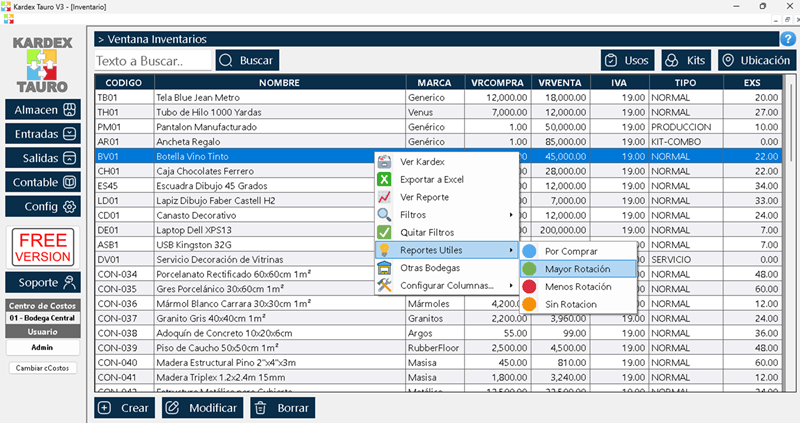
Paper works well while volumes are small. Once the business starts serving more people, running several sites or needing to find a signed document months later, the folder becomes a problem. That is the moment to consider a system that keeps each person's record, the documents they signed and the dates, so that any query is answered in seconds. Tools such as Kardex Tauro help keep that archive organised and backed up, without losing track of who authorised what and when. The point is not to replace the signed document, but to be able to find it the moment it is needed.
Internal use and professional responsibility
This template is an internal-use format. It does not constitute medical or legal advice, and its content is only a general guide that each business or professional must adapt to their own reality. Before putting it into circulation, review the text with the professional who will provide the information and with the corresponding adviser, so that the document reflects exactly what will be explained to each person.
Keep in mind as well that no document replaces the verbal explanation. A signature only makes sense when a clear conversation came first, in language the person understands, with time to ask questions and with a real chance to say no. File the signed original, hand over a copy and keep your records in order: that protects both the person authorising and the professional attending them.
This template is part of the index of Word templates, which gathers them grouped by family.
⬇ Download informed consent form (.docx)