Exam and quiz template for Word

Exam and quiz template for Word
Building an assessment does not start when you write the first question, but when you decide what you want to check, how much each item is worth and how you will score an answer from a student who understood the topic but explained it in their own words. Most problems in a test do not show up in the questions: they show up in points that do not add up, in instructions nobody read and in an answer key put together in a hurry after printing. This exam and quiz template for Word keeps all of that in one document: assessment data, instructions, a multiple-choice question bank, open-ended questions, an answer sheet, the answer key and a results review.
It works for a half-hour unit test as well as for a short reading-check quiz, and it works the same whether you teach with a textbook, with a notebook or with your own material: the document does not impose content, only the structure where you write it. Download it in Word format, edit it on any computer and adapt it to your institution's name without special software or an internet connection.
If you have ever had to rebuild an answer sheet by hand, or scored two tests from the same group differently because the key was in your head instead of on paper, this template solves exactly that: it writes the rules down before the assessment is given, not after a student has questioned the grade.
⬇ Download exam and quiz (.docx)What it is and what it is for
An exam and a quiz are different instruments, but they share the same need for order. An exam measures learning in more depth and almost always includes open-ended questions; a quiz is shorter, is given more often and is usually answered with choices. The template covers both cases in a single file, with separate sections for what the student sees and for what only the teacher sees.
There is a very concrete reason to write the assessment before giving it: once the group has seen the test, nothing can be changed without affecting those who answered it first. Everything still pending, what a question is worth, what counts as a valid answer or whether the time is enough, is better decided with the document in front of you and the group out of the room.
It is worth using it, among other things, to:
- Plan the assessment before writing the questions, defining the total score, the time available and what is allowed during the test.
- Write multiple-choice questions with their options and their difficulty level in plain view, so you do not stack three easy questions in a row.
- Write open-ended questions together with the expected answer and the points a complete answer must contain.
- Keep the answer sheet apart from the question pages, so the student marks a grid instead of writing over the question.
- Build the answer key before the assessment is given, with the score of every question already settled.
- Record what turned out to be difficult and what needs to be reviewed in the next class.
The practical difference between the two instruments is time and purpose. A check quiz is answered in a few minutes and tells you whether the group followed the reading or whether the previous lesson left doubts; a unit exam asks for more work and is given once the topic has been taught, practised and corrected in class. Mixing both uses into one long test is one of the reasons students run out of time and answer the last questions at random.
How to write the questions
The structure is of little use if the questions cannot be understood. Before writing, decide what you want to check at each point of the syllabus and choose the type of question that fits; then read the stem as if you were seeing it for the first time.
| Question type | When it fits |
|---|---|
| Multiple choice | When there is one clear correct answer and several plausible options; it covers a good deal of content in little time. |
| Short answer | When you want to see whether the student can explain in their own words, apply an idea or justify an answer in a few lines. |
| Extended response | When the topic asks for connecting concepts, analysing a case or building a full argument. |
| Review question | When you want to close a lesson or prepare the next one, without it counting towards the grade. |
A well-written stem says what is asked, how much is expected and in how much space; if you need to explain it out loud before handing out the test, it is not ready yet.
What the template includes
The document has eight numbered sections and a control table at the end. This is the actual structure, section by section:
| Section | What you write |
|---|---|
| 1. Assessment data | Name of the assessment, subject or area, course or grade, teacher, time available and total score. |
| 2. Instructions | How many questions there are, what each one is worth, whether a calculator or support material is allowed and what the student should do when a question is not clear. |
| 3. Multiple-choice questions | Ten rows for the question stem, the answer options, the correct answer and the difficulty level. |
| 4. Open-ended questions | The question, the expected answer and the score assigned to each item. |
| 5. Answer sheet | A numbered grid where the student marks the chosen option without writing over the question. |
| 6. Answer key | The correct answer for each question with its score, plus the note to list the key points of open-ended answers instead of the answer word for word. |
| 7. Results review | Which question was hardest, what topic needs reviewing and what should be adjusted for the next assessment. |
| 8. Control and signatures | Space for the teacher's name and signature, and the instruction to file the document with its attachments in the area folder. |
How to use it, step by step
- Open the file in Word and save a copy named after the assessment and the term, instead of working on the original.
- Fill in the general data: subject, course, time available and total score. If you later change the total score, adjust the sum of the questions before moving on.
- Change the institution name that appears in the footer and update the document code in the control table, so the assessment is identified with your school and carries its own version and date.
- Write the instructions for the student. There you set rules, not content: number of questions, value of each one, material allowed and what to do when in doubt.
- Write the multiple-choice questions with their options and mark the difficulty of each one, so the test has a sensible progression.
- Write the open-ended questions and, in the expected answer column, list the points a complete answer must contain.
- Fill in the answer key and the answer sheet before printing, and check that the scores add up exactly to the total you declared.
- After grading, write the topic that needs reviewing in the results review and sign the control table.
The order matters: first the data and the rules, then the questions, and the key at the end but before printing. If you leave the key for grading day, you will end up accepting answers you had not foreseen simply because they came first.
Common mistakes
- Leaving the total score printed at the top without checking that the questions add up to it; students spot the mismatch before the teacher does.
- Building the answer key after the test has been given, when alternative correct answers are already there and nobody considered them.
- Writing open-ended questions without defining the points the answer must contain, so two teachers grade the same test differently.
- Asking students to mark on the question page instead of using the answer sheet, which makes later review slow and confusing.
- Reusing the same assessment term after term without updating the code, the version and the date, until the record is no longer trustworthy.
- Printing the assessment without checking spelling and question numbering, then correcting those slips in front of the students during the test.
None of these mistakes needs new software to be fixed: they are solved with a short review before printing and with the habit of filling in the key inside the same document, not on a separate sheet that later goes missing.
When to move to a system
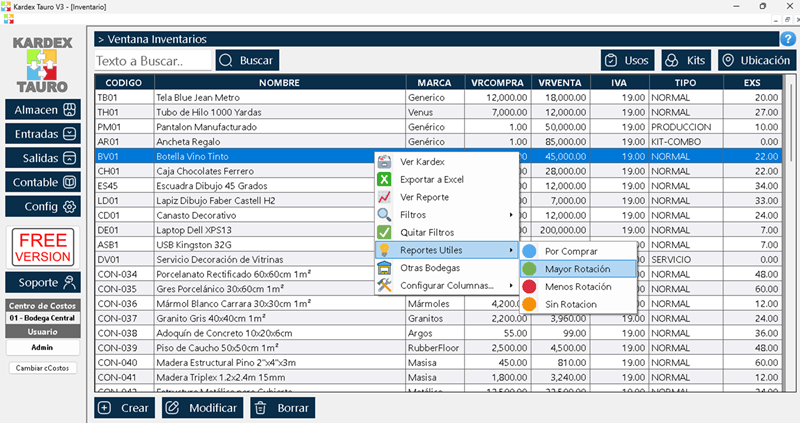
The template works very well while assessments are built, printed and graded by hand, and for most teachers that is enough for years. The moment to change does not arrive when the test is long, but when the volume of paperwork starts competing with teaching time: several subjects, several courses, corrections that repeat almost unchanged, versions that get lost and no one who knows for sure which assessment was given to which group. If your work still fits in a tidy folder, the Word document is enough and faster. If it no longer fits, a system such as Kardex Tauro helps keep question banks, record results and rebuild history without retyping everything by hand, and leaves the template for what it does best: writing questions with judgement.
In the meantime, the habit of filling in the results review after every assessment is worth more than any format: that short record is what tells you, term after term, which topics keep failing and which questions never work well. A tidy file with that history is worth far more than a folder full of unread tests, and it is also the best starting point if you ever move to another tool.
This template is part of the index of Word templates, which gathers them grouped by family.
⬇ Download exam and quiz (.docx)