Purchasing and suppliers: a guide to the supply cycle

Purchasing and suppliers: a guide to the supply cycle
Procurement is where inventory is born. Before a product reaches the shelf or the warehouse, someone had to decide what to buy, from whom, in what quantity and at what price. That decision does not end with the order: it continues when the merchandise arrives, is inspected, is recorded and, when necessary, is returned. Buying well avoids three problems that drain small businesses: stockouts that lose sales, overstock that freezes cash, and losses that appear when nobody checked what was received.
This guide brings together the articles on the purchasing cycle in a single route with four stages: planning, buying, receiving and resolving. Each section explains what to do and why, and links to the article where the topic is covered in depth. You can read it from start to finish or jump straight to the stage that hurts today.
Planning the purchase: the work that prevents emergencies
Most urgent purchases are not born from a sales spike but from a lack of planning. When a product runs out and is ordered against the clock, you accept higher prices, longer lead times and suppliers you barely know. Planning is the opposite: deciding calmly, with information, before the need becomes an emergency. Good planning starts with knowing who you buy from, how long delivery takes and how much stock each order covers; the three answers come from the articles below.
The first piece of information is supplier reliability. It is not about having many suppliers, but about knowing the ones you use well: what they deliver, how long they take and where they fail. The article on how to control suppliers and inventory explains how to keep a useful record of each supplier alongside the behavior of your own stock, because both sets of data are read together: a slow supplier forces you to hold more safety stock, and a messy inventory makes every supplier look unreliable.
When you consider working with a new supplier, the decision should not depend on the price of the first quote. The method to evaluate a supplier before buying from them, with criteria and scores, lets you compare options objectively: on-time delivery, consistent quality, response to claims, price stability and real capacity to handle orders. Giving points to each criterion leaves a documented decision you can revisit when something goes wrong.
The third piece of information is delivery time. Between the moment you order and the moment the merchandise is ready to sell, more days pass than it seems: order issue, supplier preparation, transport, receiving and recording. The article on purchase lead time, how to calculate it and why it messes up your stock shows that without a measured figure your reorder point is calculated wrong and your stock drifts off without anyone understanding why. Measuring it per product and per supplier turns the purchasing calendar into a predictable tool.
With those three inputs, planning a purchase comes down to answering four questions in order:
- Which product, and what quantity, do I really need?
- Which supplier offers the best balance of price, lead time and reliability?
- When should I order so the merchandise arrives before I run out?
- What does it cost me to hold the goods while they wait to be sold?
Buying: the order that leaves a record
When it is time to buy, everything must be in writing. The purchase order: what it is, what it includes and how to do it right turns a conversation into a commitment: products, quantities, agreed prices, delivery date and payment terms. Without a purchase order, any later claim becomes a "he said, she said" argument, and the inventory receives entries nobody authorized. The order also works as the single reference for receiving: it is the document every incoming box is compared against.
A well-made order also prevents duplicate purchases. In businesses that buy spare parts or replacement supplies, the classic risk is ordering too much because nobody knows what is in the warehouse. The article on buying spare parts from suppliers without forgetting what you already have shows how to check your inventory before issuing the order, so you do not pile up duplicates that take up space and freeze money that could be working.
A purchase is also not an isolated event: it is an inventory entry with a date, a cost and an origin. Understanding how to connect purchases and inventory makes every order show up in the stock without double records and makes the cost of what you bought feed the inventory value correctly. The purchase order, the entry in the stock ledger and the supplier invoice should tell the same story; when they do not, the problem is caught during reconciliation and fixed in time.
Receiving: where money is won or lost
Many businesses lose more money receiving badly than buying badly, because incomplete, damaged or wrong merchandise gets paid for anyway if nobody checks it. The receiving of goods with an 8-point checklist to avoid losing money at the dock details what to check on every delivery: transport document, quantities, references, condition of the packaging, dates and agreed terms. The checklist is not bureaucracy: it is how you claim on time, activate insurance when it applies and keep the stock ledger honest from day one.
The most expensive mistake is signing for the delivery before opening the boxes. The guide to verifying every shipment against your purchase order teaches you to compare each received item with what was agreed: the right reference, the requested quantity and the condition it arrived in. Signing with remarks is valid and protects the business, but it only helps if someone actually checked before signing. If the driver is waiting, the review can be fast: count the boxes, check the seals and open a sample of each reference.
It also helps if the person who receives is not the same person who buys, so there is a cross-check, and if you set receiving hours so the process is not rushed. An orderly receiving process produces three benefits that show up at the end of the month:
- Physical inventory matches the records from the first day.
- Differences are claimed from the supplier in hours, not weeks.
- The recorded cost of the goods received is what was really paid.
Resolving: returns and payment terms
Even the best planning does not eliminate problems: it turns them into manageable exceptions. When merchandise arrives damaged, wrong or in excess, the outbound movement also has to be recorded. The article on supplier returns: how to record the outbound movement and the credit note describes the full flow: supplier authorization, physical return of the goods, the return document and the credit note that offsets the value. If the return is not recorded as an outbound movement, the inventory shows stock that is no longer there; if the credit note is not collected, the business pays twice for the same thing.
The other side of resolving is cash flow. The method for negotiating payment terms with suppliers without running out of stock shows how to reach sustainable agreements: terms aligned with the business sales cycle, early-payment discounts that are actually worth it and communication that does not put the next shipment at risk. A mismanaged term weighs less than an annoyed supplier who stops dispatching; the relationship deserves as much care as the price.
The complete cycle: from order to reliable inventory
The supply cycle closes when what you bought becomes a reliable piece of inventory data: planned with evaluated suppliers and known lead times, formalized in a purchase order, received against a checklist, recorded as an entry and, when needed, resolved with a documented return. Each stage protects the next one: planning reduces urgent purchases, the order makes receiving easier, careful receiving reduces returns, and recorded returns keep the inventory honest. Whoever masters the full cycle buys less out of urgency and sells more out of availability.
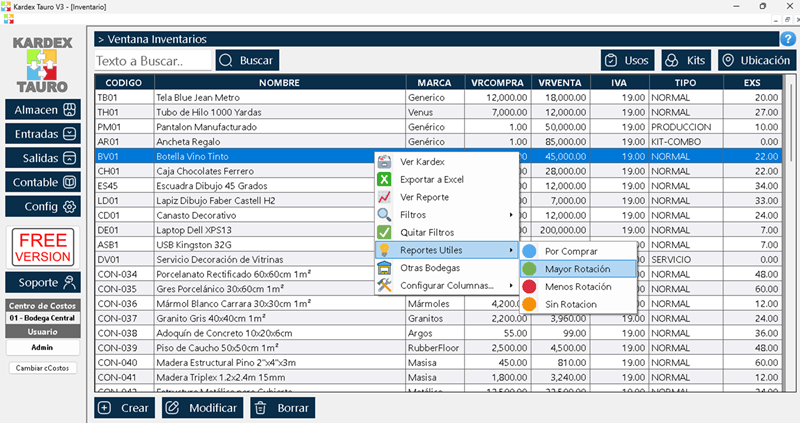
For small businesses, running this cycle by hand or in spreadsheets works up to a certain volume of operations; a system such as Kardex Tauro automates the recording of orders, entries and exits so the stock ledger updates itself and the counts add up. And to see how procurement fits into the overall management of the business, we recommend the complete guide to inventory control for small businesses, which connects purchases, sales, returns, counts and metrics in a single map.
Keep reading
- How to control suppliers and inventory
- How to evaluate a supplier before buying from them
- Purchase lead time: what it is and how to calculate it
- Purchase order: what it is and how to do it right
- Buying spare parts without forgetting what you already have
- How to connect purchases and inventory
- Receiving goods: an 8-point checklist
- Verifying every shipment against your purchase order
- Supplier returns and the credit note
- Negotiating payment terms with suppliers
- Inventory control: the complete guide for small businesses