Source card template for Word

Source card template for Word
When a piece of academic writing rests on several sources, the hard part is rarely the reading itself. It is remembering exactly where each idea came from. The source card template for Word takes on that problem: it is a ready-to-fill sheet, with the fields already laid out, that keeps the details of one source and the quotations you plan to use in a single place. Instead of scribbling notes into notebooks, folded slips of paper or a phone app, everything stays in one file you can sort, print and come back to whenever you need it. A well-made card takes a few minutes to fill in and stays with the work from the first exploratory reading to the final check before submission.
It is built for high school and university students, for teachers who are showing their classes how research actually works, and for anyone assembling a monograph, an essay or a research project. It behaves the same way with a printed book, a chapter inside an edited collection, a journal article, a thesis or a web page, because the fields adapt to whatever kind of source you have in front of you without forcing you to invent new categories. If the source is digital, the card also reminds you to save the link and the date you consulted it, two details that are very easy to lose.
The real payoff shows up at the end. Once every source has its own card, the reference list stops being a last-minute scramble: it builds itself out of details you already checked while reading. And months later, when you return to the text, you know why you kept that source, what it actually said, and where in the paper you put it to work. That traceability is what separates organised research from a pile of quotations with no clear origin. When several people share a project, a complete card also lets whoever writes another section see at once what each quotation rests on and where it came from.
⬇ Download source card (.docx)
What a source card is and what it is for
A source card is an orderly record of one source: who wrote it, what it is called, when and where it was published, and what you intend to take from it. The template turns that idea into a concrete sheet you can fill in within a few minutes and that saves hours of searching later. Its most common uses are:
- Recording a source's full details the moment you have it in your hands, rather than relying on memory or hunting for it again.
- Keeping direct quotations together with their page numbers, ready to drop into your draft when you start writing.
- Separating clearly what the source says from what you think, which prevents mix-ups that are very hard to spot afterwards.
- Judging whether a source is reliable, current and relevant before you build an important argument on it.
- Noting which chapter or section of the paper each source belongs to, so no reference is left dangling and no quotation appears twice.
- Linking sources to one another when they cover the same ground, so that agreements and contradictions become visible.
The template also works as a teaching tool: asking for one card per source is a simple way to check whether a student really read the material or merely copied a summary from somewhere else. It also helps you notice when two sources say the same thing in different words, which happens often and is worth catching early so that you do not make the same argument twice. With those six questions answered, any source that passes through your hands stops being a file lost in a folder and becomes material you can defend calmly, whether in front of your teacher or in front of an examining panel.
What the template includes
The document comes with every section already labelled and a control table at the end, with room for the signature of the person who fills it in and the person who reviews it. This is the structure you will find:
| Section | What you write |
|---|---|
| Source details | Author or authors, full title, type of source, and year or date of consultation. |
| Full reference | The reference written out exactly as it will appear in the final list, with publisher, place or link as appropriate. |
| Details and quotations to use | The direct phrases or paraphrased ideas you plan to use, each one with its corresponding page number. |
| Summary of the source | A short summary, in your own words, of what the author argues and how they argue it. |
| Evaluation of the source | How reliable and current it is, who published it, and which limitations should be acknowledged. |
| Where it is used in the paper | The specific chapter, section or argument this source will support. |
| Related sources | Other cards that speak to this one, either because they agree or because they disagree. |
| Control and signatures | Document code, version, owner, date and review. |
The control table deserves special attention: it is what lets you know, weeks later, which version of a card was the last one and who approved it. In group work it saves long arguments about which detail is the correct one. If a section does not apply to the kind of source you are using, leave it blank or mark it as not applicable: that is far better than filling a field with an invented detail.
How to use it step by step
- Open the file, save it under a different name and replace the institution name in the footer with that of your school, college or university.
- Update the document code in the control table and note the starting date, so it is easy to trace which version you are looking at later.
- Fill in the source details while the source is in front of you: author, title, type and date.
- Write out the full reference in the format your teacher or institution asks for, and check the punctuation calmly.
- Copy the quotations you plan to use, each with its page number, and mark whether it is word for word or paraphrased.
- Write the summary in your own words and add the evaluation: doing so forces you to decide whether the source deserves the space you are giving it.
- Note where the card will be used in the paper, and list the related sources you have already recorded.
- Close the control table with your name, the date and the review, then file the card in a folder sorted by author or by topic.
One practical piece of advice: fill in the card at the moment you are reading, not the next day. Memory relies on context, and going back to a book to recover a detail costs far more than writing it down while it is in front of you. If you follow those steps consistently for the first few weeks, the habit sustains itself: filling in a card takes about the same time you used to spend underlining a paragraph, except that afterwards there is nothing left to reconstruct.
Most of these problems come down to one rule: write everything down as you go, even when it seems obvious, because the obvious details are the first to slip away.
Common mistakes
- Leaving the reference incomplete and trusting yourself to finish it later: when you return to the text you no longer remember where the detail came from.
- Copying the quotation without the page number, which forces you to go through the whole book again before you can cite it properly.
- Mixing your own opinion into the summary of what the author says, and later presenting your analysis as if it came from the source.
- Keeping sources you will never use, until the folder becomes unmanageable and you waste time reviewing useless material.
- Writing the reference from memory instead of copying it carefully from the title page or the credits page.
- Forgetting the consultation date on digital sources that change their content or disappear without warning.
When it is time to move to a system
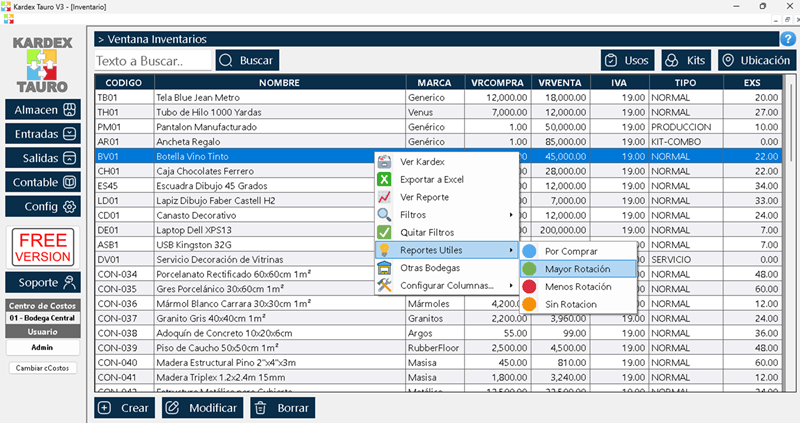
The template works very well for a single course or a single term, where each student manages their own cards and reviews them by hand. The limit appears once sources run from dozens into hundreds, once several people work from the same bibliography, or once an institution has to keep evidence of what was cited and who reviewed it. At that point loose cards become hard to search, hard to deduplicate and hard to audit, and what was missing was not more discipline but a system with search, version control and traceability. Tools such as Kardex Tauro let you concentrate that record and consult it from any computer, without losing the layout you already know; the template remains useful as a starting point and as a printed backup while that transition is being decided.
If your project is individual and short, the template is more than enough and you need nothing else. Start weighing up a system once you notice that you spend more time hunting for cards than reading new sources. In the meantime, the printed template remains an orderly backup that is easy to review at leisure.
This template is part of the index of Word templates, which gathers them grouped by family.
⬇ Download source card (.docx)